
AEO
AEO 101: A B2B SaaS Guide to Answer Engine Optimization
 Tamar HelaContent & SEO Strategist


To rank in ChatGPT, make sure OpenAI's search crawler can reach your site, publish pages that answer buyer questions in the first lines, and earn mentions on the review sites and forums ChatGPT already cites. Then check a fixed set of prompts each month to see whether ChatGPT names and links to you.
At Curio Digital, a B2B web design and SEO agency and Webflow Enterprise Partner, we track this for our own brand every week. Our starting point is honest: when we asked six AI engines "How do I get my brand cited in ChatGPT?" in October and November 2026, none of the 12 answers named us. This guide is the process we use to change that. Some of our clients have started asking us for advice on the same question, so it's also how we guide them.
Our view is simple. The steps for how to get cited by ChatGPT are the same work as good SEO, plus mentions on the sites ChatGPT reads. Point that work at the questions your buyers ask, and check the answers every month. It's the approach behind our SEO and AEO services, and the five steps below are the order we follow.
ChatGPT knows about a brand in two ways: from what it learned during training, and from what it finds when it searches the web during a chat. Training data changes slowly. What ChatGPT finds in search is the part you can influence now.
ChatGPT searches the web when a question can benefit from current information. OpenAI says those searches may go to third-party search providers such as Bing. When ChatGPT uses search, the answer shows inline citations and a Sources list with the pages it used.
OpenAI doesn't publish how it ranks those sources. It does say that any public website can appear in ChatGPT search if it doesn't block OpenAI's search crawler. So learning how to rank in ChatGPT search starts with two things you control: being reachable, and ranking well in the search results ChatGPT draws on.
For how answer engines pick sources in general, including Google's AI Overviews and Perplexity, see our guide to answer engine optimization.
ChatGPT can only cite pages its search crawler is allowed to read. OpenAI runs three crawlers, and each one does a different job, so check which ones your site blocks.
The table below shows what each crawler does and what happens if you block it, based on OpenAI's crawler documentation.
| Crawler | What It Does | If You Block It |
|---|---|---|
| OAI-SearchBot | Finds pages to show in ChatGPT search answers | Your pages won't show in ChatGPT search answers, though they may still appear as plain navigation links |
| GPTBot | Collects content that may be used to train OpenAI's models | Your content is opted out of model training. OpenAI's docs don't link this setting to search. |
| ChatGPT-User | Visits a page when a user asks ChatGPT to | It doesn't decide whether you appear in search. Because a person asked for the visit, robots.txt rules may not apply. |
Check three places, since this is the quickest part of ChatGPT search optimization to fix:
OpenAI says robots.txt changes take about 24 hours to take effect. Our Webflow AEO checklist covers the full list of crawl and indexing checks.
Before you change anything, record what ChatGPT says about your brand now. That baseline tells you which fixes matter, and it shows later whether they worked.
Use the same short process every month:
The brands ChatGPT names instead of you are the most useful part of the check. They show you how to appear in ChatGPT for that question: get mentioned in the places those brands already are.
"Every week, I run the same set of buyer questions through six AI engines, including ChatGPT and Perplexity," says Tamar Hela, SEO & Content Strategist at Curio Digital. "I note whether we're named, whether we're linked, and who shows up instead. That last part is the most useful. It tells me which review sites and lists to work on next."
ChatGPT quotes pages that answer a question clearly in a few sentences. To rank higher in ChatGPT for a buyer question, give that question its own heading and answer it in the first lines below.
These four habits make a page easier to quote:
Format matters too. Our page cited most often in Google's AI Overviews is a list post. For many buyer questions, such as "best [category] agencies," a list or a comparison is the format AI answers draw on.
These pages work best as part of a wider plan. Our B2B SaaS SEO strategy guide shows which pages to build first and how they link together.
ChatGPT often names brands that other sites talk about. To get recommended by ChatGPT, earn mentions on the review sites, forums, and reference sites that its answers already lean on.
In our own tracking, we asked six AI engines, including ChatGPT, "How do I get my brand cited in ChatGPT?" in late October and again in early November 2026. Across those 12 answers, these sites came up most often:
For B2B software, that list matches where buyers already check vendors: review sites and community threads. Run the same check for your own category in Step 2, note which sites keep coming up, and work on being present there.
Our guide to off-site mentions that get you cited covers how to earn those mentions, from review profiles and community answers to roundups, podcasts, and partner directories.
Measure two things: the visits ChatGPT sends to your site, and how often ChatGPT names you in its answers.
ChatGPT adds utm_source=chatgpt.com to the links it sends, so Google Analytics 4 (GA4) can identify those visits. To see them:
ChatGPT is where most of our AI visits come from. In Q3 2026, it sent 113 of the 120 AI referral sessions to our site, or 94%.
Analytics won't show everything. One prospect found us through a recommendation in Claude and reached out directly, and that visit never showed up as a referral in GA4. Ask new leads how they found you, and keep running the monthly check from Step 2. For the rest of your reporting, see our guide to B2B website metrics.
If you want help with this work, our team runs content, SEO, and Webflow development together, so these fixes happen in one project.
The same steps work in Perplexity, with a different crawler to allow. Perplexity SEO starts with letting PerplexityBot read your site, because Perplexity uses it to find and link the websites in its answers.
According to Perplexity's crawler documentation, PerplexityBot surfaces and links sites in Perplexity search results, and it isn't used to train AI models. A second agent, Perplexity-User, visits pages when a user asks a question, and it generally ignores robots.txt.
The table below compares what to check in each.
| What to Check | ChatGPT | Perplexity |
|---|---|---|
| Crawler to allow for search | OAI-SearchBot | PerplexityBot |
| Agent for user requests | ChatGPT-User | Perplexity-User |
| Training crawler | GPTBot, separate from search | Not listed. Perplexity says PerplexityBot isn't used for training. |
| Time for robots.txt changes | About 24 hours | Up to 24 hours |
After that, follow Steps 2 to 5 for Perplexity too: check your buyer questions, write pages that answer them, earn mentions, and track the visits.
We use this process on our own site. Between Q2 and Q3 2026:
We're not there yet for every question. ChatGPT doesn't name us yet when people ask how to get their brand cited in ChatGPT, which is part of why we wrote this guide. We'll keep tracking it every week.
Our B2B SEO case study shows how we got cited in Google's AI Overview for our own category in two months.
OpenAI doesn't publish a timeline. Changes to which crawlers you allow take about 24 hours to apply. Earning citations takes longer, because it depends on how well your pages rank and how often other sites mention you. Check the same buyer questions every month so you can see progress as it happens.
You can't pay to appear inside an answer. OpenAI sells ads in ChatGPT, but it says ads do not influence the answers ChatGPT gives. Ads are labeled and shown apart from the answer. To be named in the answer itself, your brand needs pages ChatGPT can find and mentions on the sites it cites.
OpenAI says ChatGPT search may send queries to third-party search providers such as Bing, and it doesn't name Google. Strong SEO still helps, because ChatGPT search draws on web search results. Make sure your key pages are indexed in Bing as well as Google, and allow OpenAI's search crawler.
No. GPTBot collects content that may be used to train OpenAI's models. OAI-SearchBot is the crawler that decides whether your pages can appear in ChatGPT search answers. You can block GPTBot to opt out of training and still allow OAI-SearchBot, so ChatGPT can find and cite your pages.
No. People use "ChatGPT SEO" for two different things. One is getting your brand named and cited in ChatGPT's answers, which this guide covers. The other is using ChatGPT as a tool for SEO tasks, such as keyword ideas or first drafts. Both are useful, and each one needs different work.
Yes. OpenAI has started letting businesses claim a profile in ChatGPT through its Business Hub, where you verify that you own the business. We claimed Curio Digital's profile in November 2026 and are waiting on verification. We'll update this guide with what the hub shows once our access is live.
When you're ready to turn your website into a pipeline engine, here are 3 ways Curio can help:
AEO
Tamar HelaContent & SEO Strategist
AEO
Tamar HelaContent & SEO Strategist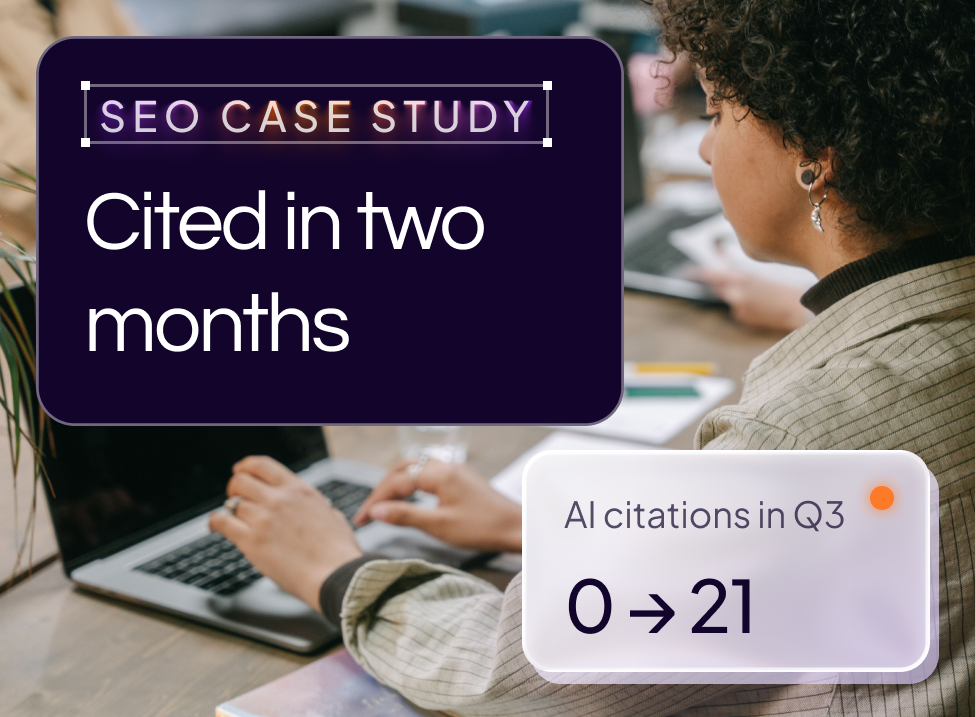
SEO
Tamar HelaContent & SEO StrategistContact us
Every engagement starts with a conversation. We’ll learn about your business, your buyers, and where your website is losing them.