Built for attention
We use motion to lead buyers through the page in the order that sells, so the key message gets seen instead of skimmed.


Motion guides the eye, explains the hard parts, and makes a site feel alive. We create animated explainers, micro-interactions, and motion graphics for B2B companies, built to add clarity without slowing the page down.

The Problem
Every section gets equal weight, so nothing stands out. Buyers skim past the part you most wanted them to see.
The last animation pass tanked your load time and your Core Web Vitals. Now motion feels like a tax on speed.
The product video is two minutes of jargon. People bounce at fifteen seconds and still don't get it.
what we do
All motion should do a job. We use motion to direct attention, explain a workflow, and reward interaction, then build it to stay fast on real devices.
We use motion to lead buyers through the page in the order that sells, so the key message gets seen instead of skimmed.

We animate with performance in mind from the start, so interactions stay smooth and your page speed and Core Web Vitals hold.

Every transition carries your brand's tone and pacing, so the site feels considered and premium, and stays memorable long after buyers leave the page.
Deliverables
Animated product graphics that make a complex product easy to follow
Motion graphics for launches, ads, and social that stop the scroll
Micro-interactions that guide attention and reward every click
Animated data visualizations that turn metrics and results into proof
Work
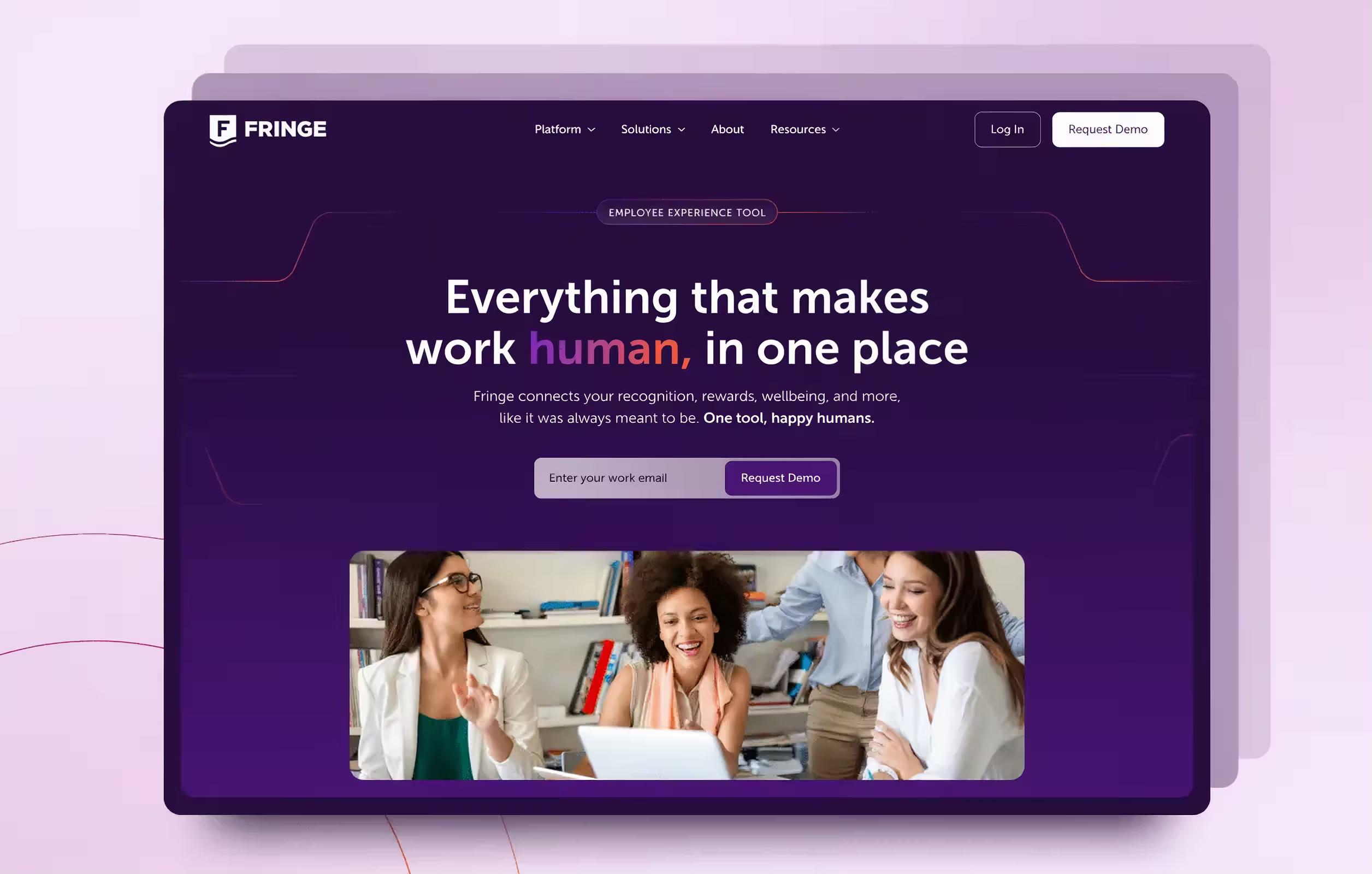
Custom product graphics created to show the platform clearly
New pages built around capabilities and use cases
Our Methodology
Motion earns its place by telling the same story the messaging tells. Done well, it directs attention and simplifies the hard parts. Done for its own sake, it pulls the eye away from the message and slows the page down. We hold it to both tests.
Every animation has a weight, and weight is a ranking input. We compress hard, embed video where video does the job better, and measure against Core Web Vitals instead of assuming.
Motion does its best work when it drives home the benefit and draws the eye to what matters most. That’s the whole bar. Movement that does neither is a distraction wearing production value.
Animations ship as reusable Webflow components, not one-off builds. The next landing page inherits the motion system instead of starting a fresh round of production.
Find where buyer
intent startsWhere buyers search
and ask AIWhere visitors
stall on-site
Bet where it
matters mostContent targets
worth winningA backlog ranked
by impact
Publish, personalize,
and testContent built
to be citedTests sized to
your traffic
Learnings compound
every roundRankings feed
round twoWins roll out,
losses teach
Growth System
Compounds each roundGet found, every roundConvert more, every round

Meridian came to us with a site that looked three years behind their product. Six months post-launch:
up 490%
demo growth


“Every deliverable from the designs that they make to the development, it's flawless and done swiftly.”

CCC's website redesign elevated their brand and increased conversions:
up 300%
form conversions
Motion guides the eye, explains the hard parts, and makes a site feel alive. It has the most impact when it's helping tell the same story the messaging is telling, so the two complement each other rather than compete. When motion drives home the benefit of the product, draws attention to the most important aspects, and genuinely tells that story, it's doing its best work. Anything else is movement for movement's sake.
It can, which is why measuring is the only real safeguard. There's no one-size-fits-all rule, so we keep animations short, embed video where a video will do the job better, and test everything against Core Web Vitals benchmarks. Everything gets compressed as far as it can go while keeping quality. If something lands above the benchmarks, we either shorten the animation, simplify it, or work to compress it further. Measurement is what turns that from a promise into a check.
Runtime and technique set most of it. Seconds of animation, how many distinct pieces, and the method used all move the number, whether that's GSAP, Rive, Lottie, or After Effects. Two more factors matter: whether an existing visual style or graphics library already exists to animate against, and whether the motion ships in Webflow or gets handed off. Highly custom animation is time-consuming rather than difficult, which makes it a budget and timeline conversation we have up front.
Either works, and the tooling isn't the important part. There are a million ways to build motion in Webflow, including GSAP, which is Webflow's own tool now, plus Rive, Jitter, Lottie, and After Effects for creating the animations. What matters is that you can build quickly, build well, the motion looks high quality, and it performs on the site. That means compressed as much as possible while keeping quality, not affecting page load speed, and not distracting the user.
When it does none of the work. Movement for movement's sake pulls the eye away from the message or slows the page down, and both cost you conversions. The test is whether the motion is helping tell the same story the messaging tells. If you can remove an animation and the page communicates just as clearly and loads faster, it was decoration. The most common version of this is a site compensating for weak messaging with goofy animation.
Most can benefit, because motion is really a storytelling component. The ones that benefit most have more complicated, more abstract software services, where motion helps simplify the features, focus on the benefits, and tell that story. If your product is hard to explain in a sentence, motion earns its keep fastest. But any B2B company can benefit from motion if it's done correctly and held to a performance budget.
Style direction is the gate. Once the look and behavior are settled, individual animations move quickly and predictably, so the first piece takes disproportionately longer than the rest. Whether the motion ships as reusable Webflow components or gets handed off as files also changes the back half of the schedule. Performance testing sits at the end and isn't optional, since that's where compression and simplification decisions get made.
Contact us
Every engagement starts with a conversation. We’ll learn about your business, your buyers, and where your website is losing them.


