AEO
AEO 101: A B2B SaaS Guide to Answer Engine Optimization
 Tamar HelaContent & SEO Strategist

 Tamar HelaContent & SEO Strategist8 Min Read
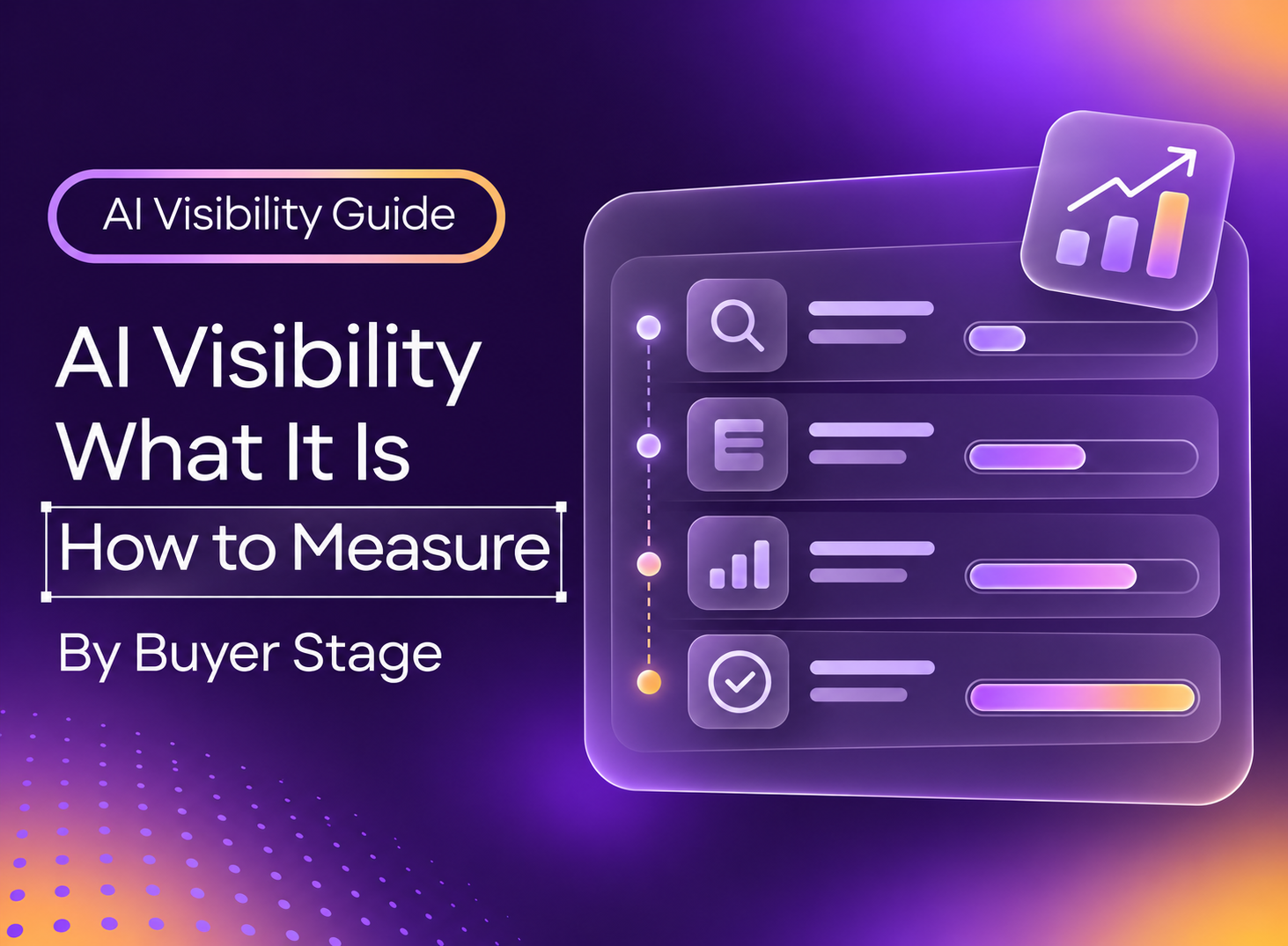
AI visibility is how often AI tools like ChatGPT, Perplexity, Gemini, and Google's AI Overviews name, cite, or recommend your brand when buyers ask about your category. You measure it with a fixed set of buyer prompts, run on a schedule, and report it as mentions, citations, share of voice, and accuracy.
Sooner or later, a CEO asks the marketing team, "Are we showing up in ChatGPT?" Most teams answer with one AI brand visibility score from a tracking tool. That number is easy to report and easy to misread.
We track our own AI visibility every week at Curio Digital. Our overall score in November 2026 was 21%. That looks fine until you split it by buyer stage: AI named us in 3% of answers before the buyer knew our name, and in 97% after. This guide shows how to measure AI visibility so you see the real split, and how to report it.
AI visibility is your brand's presence in answers written by AI tools. When a buyer asks an AI tool a question about your category, three things can happen to your brand:
A brand can be cited without being recommended. Our guides get cited in AI answers about hiring a web design agency, for example, while the answer recommends other agencies. Each of the three tells you something different, so track them separately.
You'll also see AI visibility called LLM visibility, AI search visibility, or generative engine visibility. The work behind it is usually called answer engine optimization (AEO) or generative engine optimization (GEO). The names differ, and the measurement is the same.
Most AI search visibility metrics come down to four numbers. Track them in this order, because each one answers the next question a reader of your report will ask.
Some tools also report sentiment or a "likelihood" score. Treat those with care. They can shift between two runs of the same prompt, which makes them a weak trend line.
To measure AI visibility well, group your prompts by how much the buyer already knows. A buyer who has never heard of you asks different questions from one comparing you with a competitor, and AI treats your brand very differently in each case.
We use five stages. For a set of 25 prompts, we aim for roughly this mix:
| Stage | What the Buyer Knows | Example Prompt | Prompts in a 25-Prompt Set |
|---|---|---|---|
| Problem Aware | Describes the problem but hasn't named a solution | "Our website doesn't bring in demo requests. What should we fix first?" | About 5 |
| Solution Aware | Knows a type of solution exists and wants options | "Best AEO agency for B2B" | About 10 |
| Alternatives | Looks for alternatives to a brand they already know | "Amply alternatives for B2B web design" | 2 to 3 |
| Comparison | Compares your brand with a competitor | "Curio Digital vs Amply" | 2 to 3 |
| Brand Aware | Asks about your brand by name | "What does Curio Digital do?" | 4 to 5 |
The first three stages measure reach: does AI bring you up when the buyer hasn't asked about you? The last two measure accuracy: when the buyer asks about you, does AI get you right?
A few rules make the prompts useful:
Here's what this looks like with real numbers. We track 50 prompts for Curio Digital in RankPrompt, across six AI tools: ChatGPT, Perplexity, Google AI Overviews, Claude, Gemini, and Grok. Across our weekly runs on November 9 and 16, 2026, those prompts returned 474 answers. We grouped each prompt by stage based on its wording.
| Stage | Prompts | Answers | Answers Naming Curio | Rate |
|---|---|---|---|---|
| Problem Aware | 10 | 90 | 2 | 2% |
| Solution Aware | 28 | 258 | 8 | 3% |
| Alternatives | 3 | 36 | 3 | 8% |
| Comparison | 3 | 30 | 29 | 97% |
| Brand Aware | 6 | 60 | 58 | 97% |
| All Prompts | 50 | 474 | 100 | 21% |
| Prompts That Don't Name Curio | 41 | 384 | 13 | 3% |
A 21% score would look healthy in a monthly report. But almost all of it comes from prompts that already contain our name. When a buyer asks for options without naming us, AI names Curio in 13 of 384 answers. That 3% is the number we're working to move.
The branded prompts taught us something too. On our first run in October 2026, five of the six AI tools brought up a different company, Curio Digital Therapeutics, when asked "What is Curio Digital?" A 97% mention rate on branded prompts doesn't mean AI describes you correctly. Read those answers, and fix your own descriptions where they're wrong.
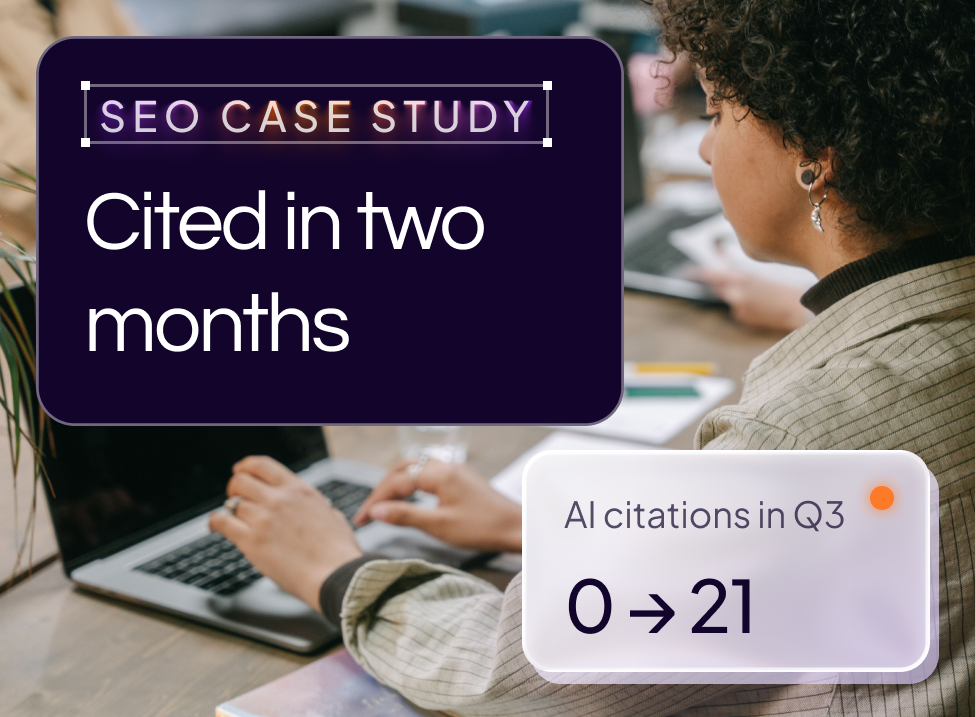
We've seen the reach side move, too. Two months after we published a list post on B2B web design agencies, Google's AI Overview cited it for "b2b web design agency." The timeline is in our own AI Overview case study.
You can start tracking AI visibility this week, without a paid tool:
Running prompts by hand works for a small set. Once the weekly run takes more than an hour, or you want six tools instead of two, a tracking tool is worth the cost. Most tools follow the same model: you load prompts, pick engines, and set a schedule.
Two habits keep the data clean. First, lock your prompt set early. Each time you change a prompt's wording, its trend line starts over. Second, treat single answers as noise. AI tools return different answers to the same prompt from one run to the next, so one week tells you little. Four weeks tells you a lot more.
Report AI visibility the way you'd report any channel: a few numbers, a trend, and what you'll do next.
A one-page monthly report can cover it all: non-branded mention rate, branded accuracy notes, share of voice against two or three competitors, AI referral visits and the demos that followed, and the work shipped that month.
If you'd rather have a team run this for you, our SEO and AEO services include prompt tracking and monthly reporting.
Most bad AI visibility reports come from the same few habits. Check your setup against these before you share a number with leadership.
Each stage points to a different fix.
There's no universal benchmark, because tools score AI visibility differently. Compare your score with your own baseline and with two or three competitors on the same prompts. Look at non-branded prompts on their own. Branded prompts often score near 100% and make any overall score look better than it is.
Write 10 to 25 prompts your buyers would ask, then run them in ChatGPT, Perplexity, and Google once a week, signed out. Record whether your brand is named, whether your site is cited, and which competitors appear. Keep the results in one spreadsheet and compare them month to month.
AI share of voice is how often AI tools name your brand compared with competitors, across the same set of answers. Divide your brand's mentions by the total mentions of every brand in your category. If AI names five brands 100 times and 20 of those are yours, your share of voice is 20%.
Run your prompts weekly and report monthly. AI tools give different answers to the same prompt from one run to the next, so a single week can mislead you. Four or more weekly runs show the real pattern. Keep the same prompts, tools, and day of the week so the trend stays comparable.
No. SEO measures where your pages rank in search results, and AI visibility measures whether AI tools name, cite, or recommend your brand in their answers. The two overlap, because the same pages can earn rankings and citations, but they need separate tracking.
When you're ready to turn your website into a pipeline engine, here are 3 ways Curio can help:
Contact us
Every engagement starts with a conversation. We’ll learn about your business, your buyers, and where your website is losing them.